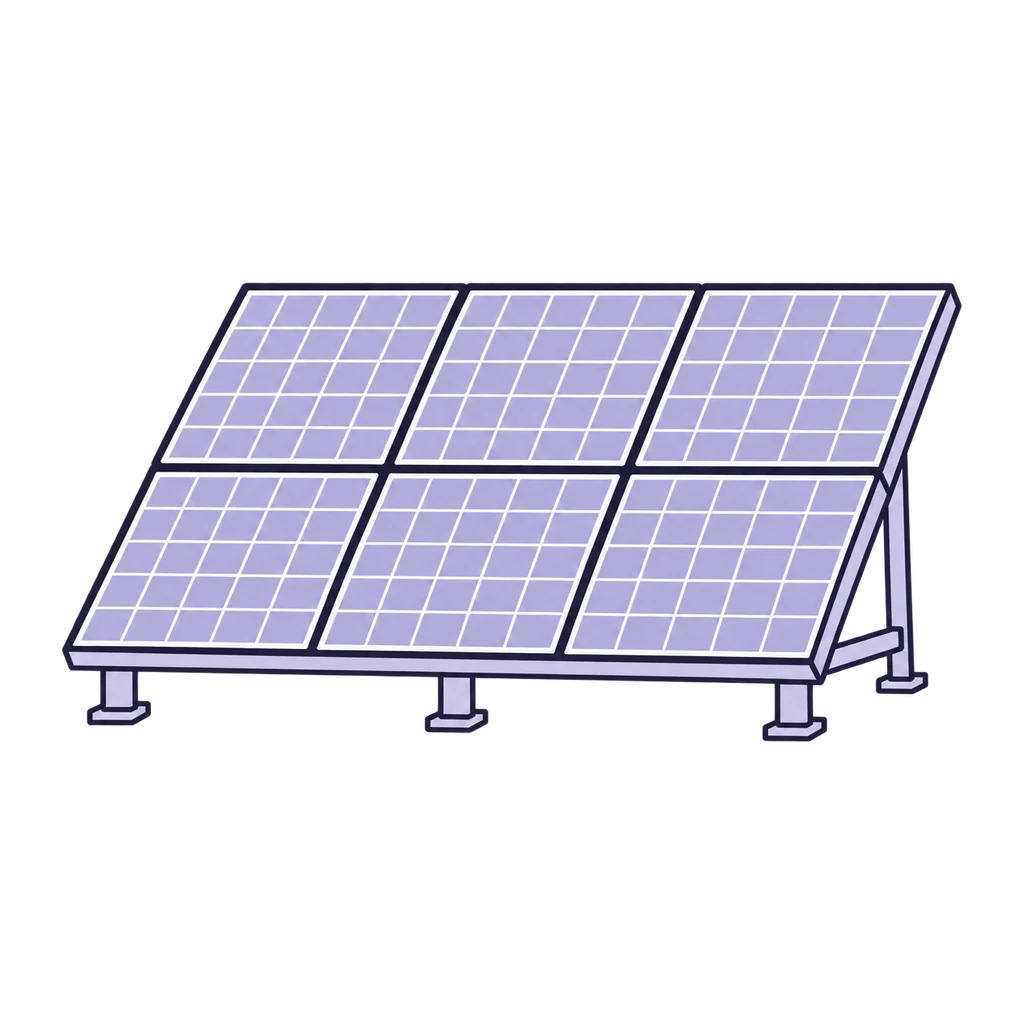
Solar panels
Turn sunlight into DC electricity.
What to plan for
Estimated from energy use and available roof area.
Confirm model dimensions, output, roof layout, shade and warranty.
 Solarify.
A visual guide for planning and comparing equipment. These illustrations show component types, not products for sale.
Turn sunlight into DC electricity.
Estimated from energy use and available roof area.
Confirm model dimensions, output, roof layout, shade and warranty.
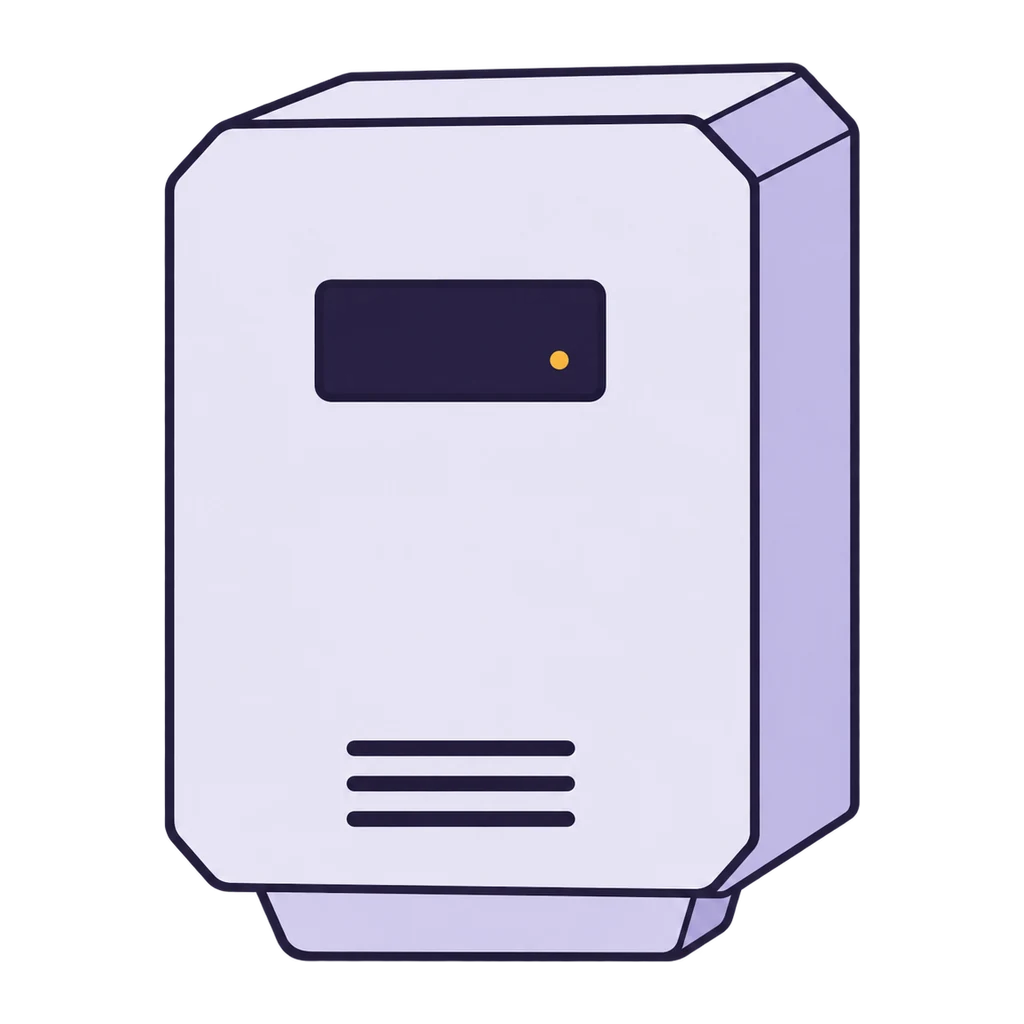
Converts electricity for the home and manages the chosen system.
One compatible system, sized after load and phase checks.
Confirm PV inputs, battery compatibility, surge output and backup configuration.
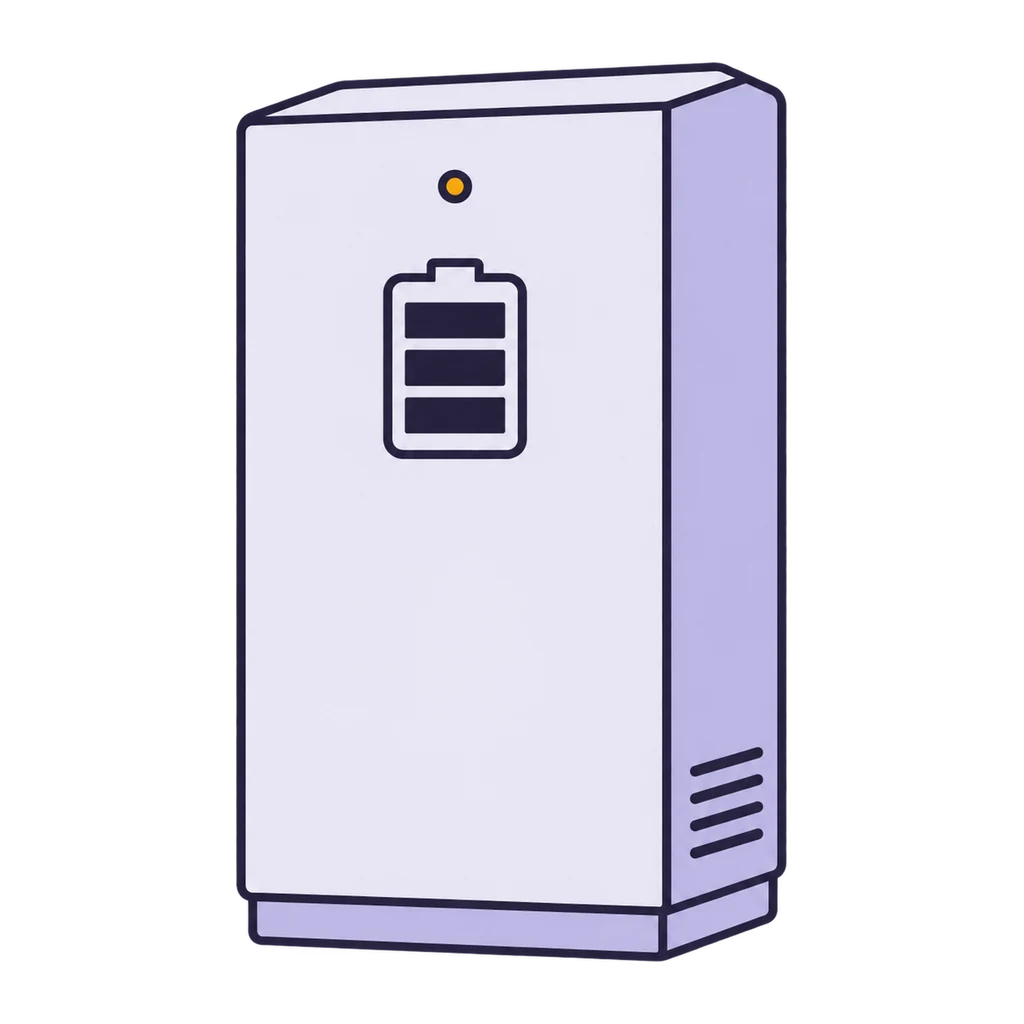
Stores energy for selected backup loads.
A nominal capacity class based on selected loads and hours.
Confirm usable energy, continuous output, manufacturer limits and warranty.
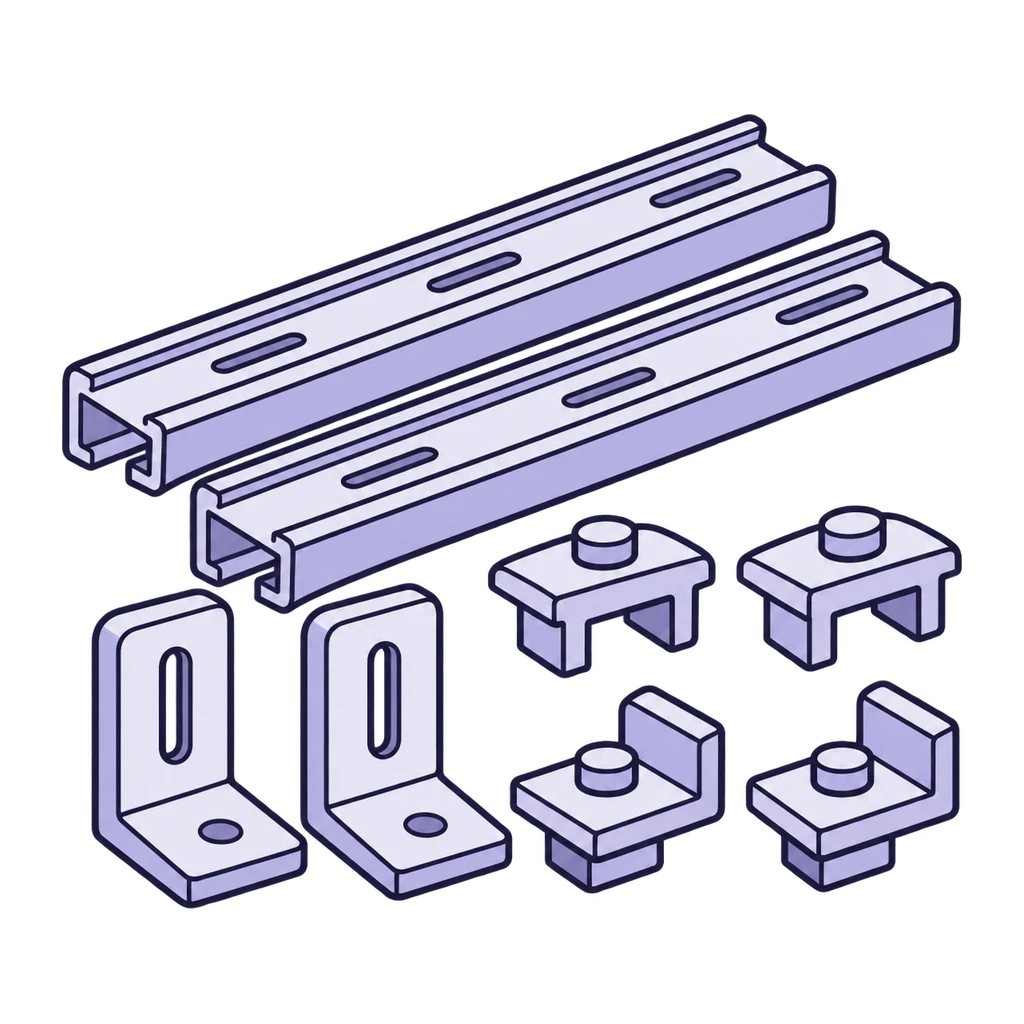
Secures the panels to a suitable roof or structure.
Site-defined rails, clamps, attachments and weatherproofing.
Confirm roof condition, structure, corrosion resistance, access and weather loading.
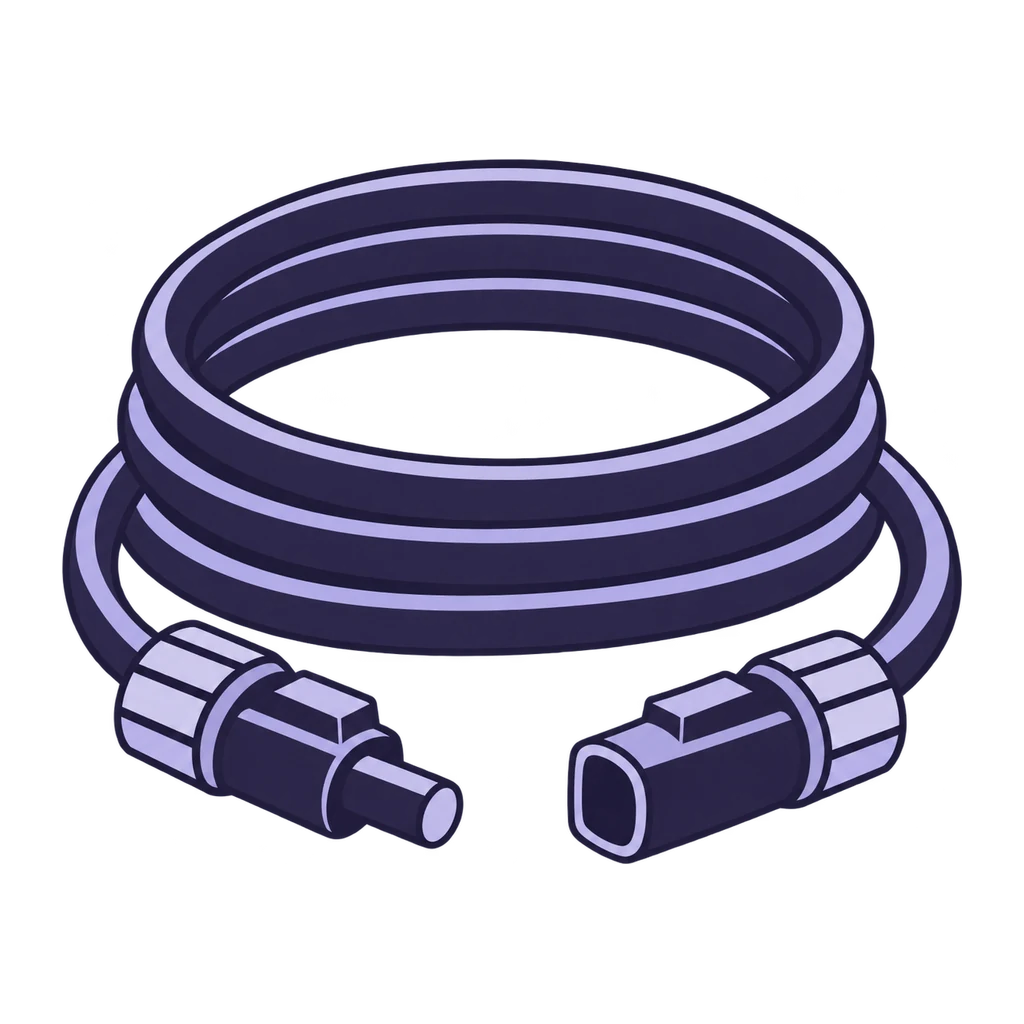
Connect the approved components safely.
Cable length, type and connectors require the actual installation layout.
A qualified designer must choose conductor sizes, ratings, routing and compatible connectors.
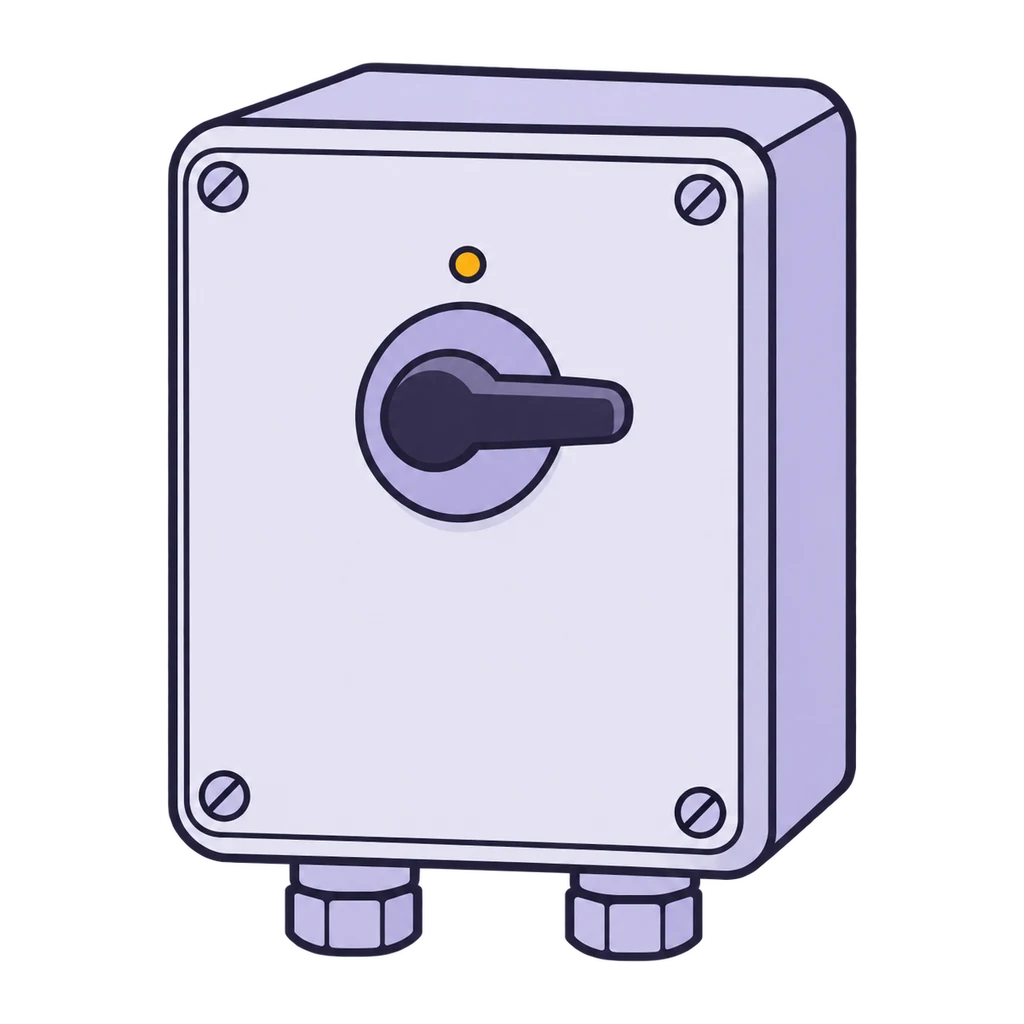
Provides the protection and isolation specified for the installation.
Site-defined protective devices, earthing and enclosures.
Device ratings and protective coordination require a qualified electrical design.
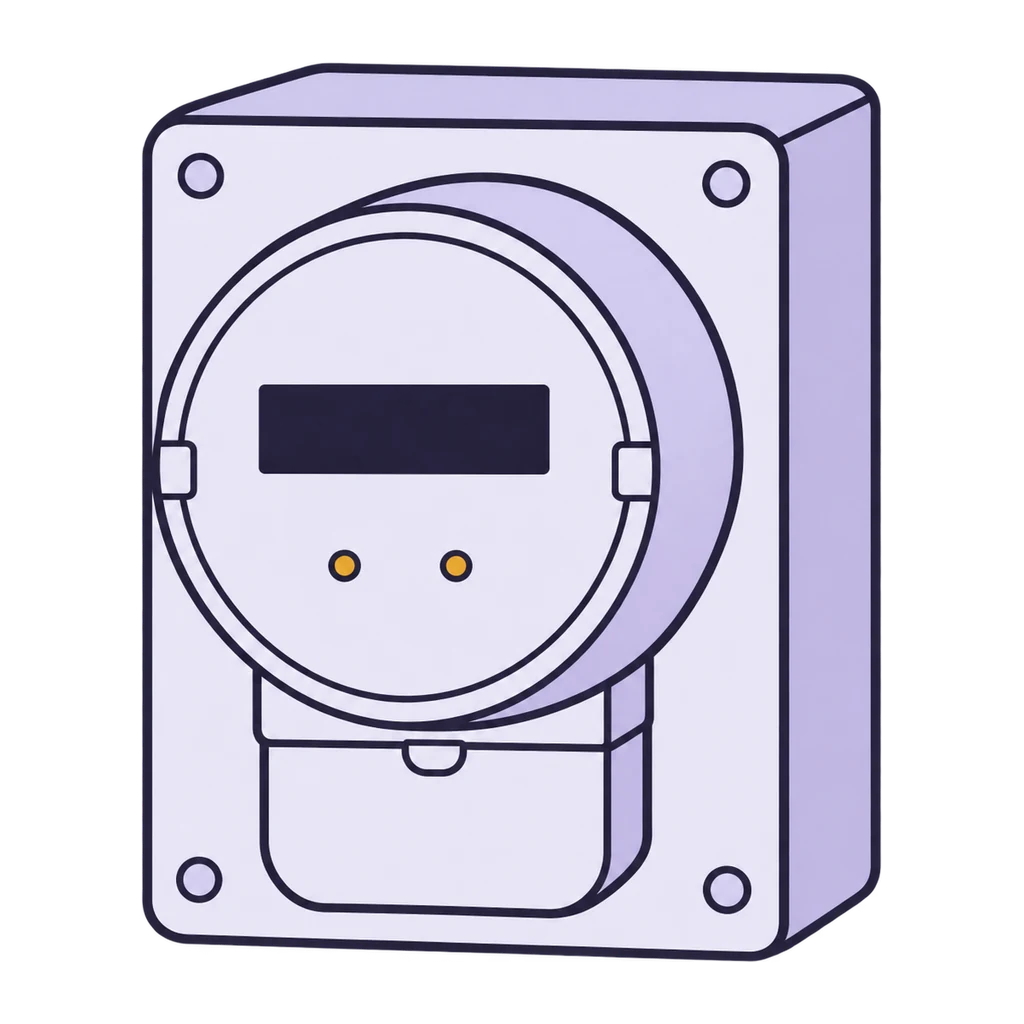
Measures grid energy; approved net metering may need a bidirectional meter.
Depends on the utility and approved grid arrangement.
Confirm interconnection eligibility, meter requirements, fees and export terms with the actual utility.
One common hybrid arrangement, explained. Actual connections depend on your equipment.
Solar panelsDC electricityHybrid inverterConverts & manages powerPlan for the PV, battery, AC and communication connections your chosen system requires, plus compatible connectors, terminations, conduit and enclosures. Breakers or fuses, isolators, surge protection and earthing must be selected as part of the electrical design. AC and DC ratings are different; the correct devices depend on the circuit.
There is no universal cable length. Record the proposed route between the array, inverter, battery and distribution board, and say whether each measurement is one-way or the full circuit. A designer checks cable size, current, voltage drop, routing and the equipment manual together before a purchase list is final.
Roof condition, shade, heat, rain exposure, cable installation method, equipment ventilation and distance between components all matter. Your selected panel, inverter and battery models also need compatibility checks. Final layout, protection and commissioning belong in a site-specific design reviewed by a qualified electrical professional.
Learn more: DC cables & protection · AC wiring principles. Always use the manuals for your actual equipment.
DIY planning does not replace a safe, site-specific design.